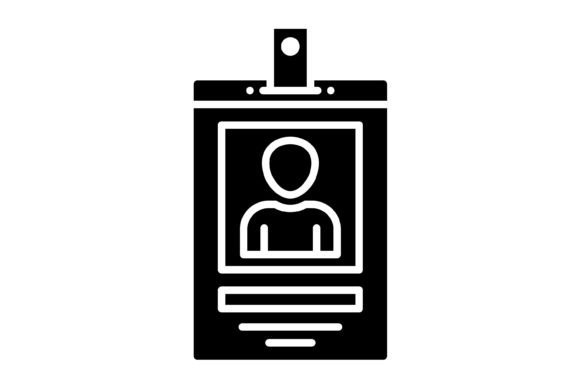
Id Card Glyph Icon: The Ultimate Design Asset for Modern Projects
Every designer knows the struggle. You're deep into a project—a new mobile app interface, a website header, or a presentation deck—and you need that one perfect visual element. Not a complex illustration, but something clean, instantly recognizable, and versatile. That's where a well-crafted glyph icon like the Id Card Glyph Icon becomes an indispensable part of your toolkit. It’s more than just a small picture; it’s a visual shorthand that communicates identity, verification, and professionalism in a single glance.
The Anatomy of a Perfect Glyph Icon
So, what makes this particular Id Card Glyph Icon stand out in a sea of design assets? First, consider its visual personality. It’s designed with a minimalist, modern aesthetic. The lines are clean, the forms are simplified, and the negative space is balanced for maximum clarity at any size. This isn't a cluttered, overly detailed illustration; it's a premium font-style asset, built with the same care you'd expect from a top-tier typeface. The overall appeal is one of efficiency and contemporary style, making it suitable for everything from corporate branding to creative side projects.
The true strength lies in its technical foundation. As a 100% vector file, this icon is infinitely scalable. You can shrink it to fit a tiny mobile app button or blow it up for a trade show banner without losing a single pixel of sharpness. This scalability is crucial for maintaining a consistent brand identity across all touchpoints. The included file formats—AI, EPS, JPG, PNG, and SVG—cover virtually every use case. The SVG format is perfect for crisp web rendering, while the transparent PNG integrates seamlessly into any design. The AI and EPS files give you full editability in Adobe Illustrator, allowing you to customize colors, strokes, or proportions to match your exact brand palette.
Where This Icon Truly Shines: Real-World Applications
Think about the last time you designed a user profile section for a website or app. A standard text label like "My Account" works, but pairing it with this Id Card Glyph Icon creates immediate visual recognition. It guides the user's eye, improves navigation, and adds a layer of polished professionalism. This is practical web design and mobile app development in action.
Beyond digital interfaces, its utility extends into the realm of marketing and editorial design. Imagine you're creating a slide deck for a client pitch. Using this icon as a recurring visual motif on title slides, section dividers, or speaker biography pages ties the presentation together thematically. For publishers and bloggers, it can serve as a custom icon for author bylines, membership programs, or contributor spotlights, adding a unique touch that stock graphics often lack.
For entrepreneurs and small business owners, this asset is a workhorse. Use it in your packaging design to denote a "verified" or "authentic" product feature. Incorporate it into social media graphics for announcements about new team members or loyalty program cards. Its versatility means it can adapt to your needs, whether you're running a tech startup, a boutique consultancy, or a creative agency.
Making It Work for You: Practical Implementation Tips
Adopting any new design element requires a bit of strategy. Here’s how to get the most out of the Id Card Glyph Icon.
Evaluate the Fit: Before you use it, consider your project's tone. This icon’s clean, geometric style pairs beautifully with sans serif fonts and modern display fonts for a cohesive, contemporary look. It might feel out of place in a project that relies heavily on ornate script fonts or rustic handwritten fonts, unless you're intentionally creating a high-contrast juxtaposition.
Master the Pairing: Effective font pairing is about harmony and contrast. If your primary brand typeface is a bold sans serif, using this icon alongside it maintains visual consistency. If you're working with a serif font for body text, the icon can provide a clean, modern counterpoint in headings or UI elements. The key is to ensure the icon's visual weight and style complement, rather than clash with, your typography.
Leverage the Formats: Don’t just use the transparent PNG because it's easy. For web projects, SVG is superior—it loads faster and scales perfectly on high-resolution displays. For print work in Illustrator, the EPS or AI file allows you to match the icon's color precisely to your CMYK values. Taking the time to choose the right format ensures the icon performs flawlessly in its final environment.
Customize for Uniqueness: The ability to edit the vector files is a game-changer. You could adjust the corner radius to match your brand's rounded or sharp aesthetic, change the fill color to a brand accent, or even combine it with other simple shapes to create a custom symbol. This transforms a stock asset into a bespoke part of your design assets library.
In the end, the value of an icon like this isn't just in its visual appeal, but in its ability to solve problems efficiently. It saves you time searching for or creating a basic visual element from scratch, ensures consistency across your projects, and elevates the overall professionalism of your work. For the designer, marketer, or business owner, that combination of utility and quality is what makes a creative font or icon set truly worth having in your collection.