Bride Glyph Icon: A Visual Asset for Modern Designers
When you're building a brand, every visual element tells a part of your story. A cohesive brand identity isn't just about a logo or a color palette; it's about the consistent, subtle language of design assets that communicate your message at a glance. Icons are a fundamental part of that language, especially in our digital-first world. A well-crafted icon set can elevate a website, streamline a mobile app's user interface, or add a professional touch to a presentation. The Bride Glyph Icon is a design asset built with this principle in mind, offering a clean, versatile, and modern symbol that speaks to elegance and commitment.
Understanding the Bride Glyph Icon's Design and Versatility
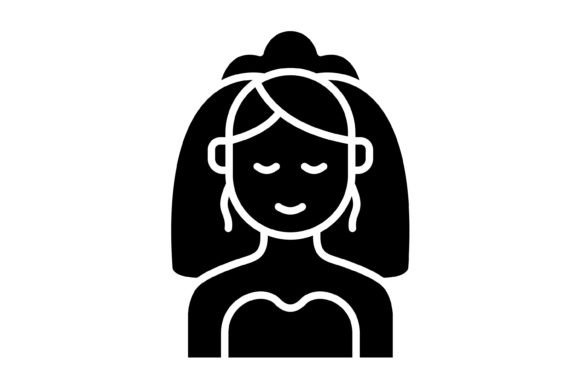
At its core, the Bride Glyph Icon is a minimalist representation, likely featuring a silhouette, a veil, or a classic bridal motif distilled into its simplest geometric form. This approach to modern typography and iconography is about clarity and instant recognition. It avoids overly ornate details, which means it scales beautifully from a tiny mobile app button to a large-format print banner. The personality of this icon is one of sophistication and simplicity. It doesn't shout; it conveys its meaning with quiet confidence, making it suitable for a wide range of aesthetics, from contemporary to classic.
The true power of a premium font or icon set lies in its adaptability. The Bride Glyph Icon is delivered in five essential formats—AI, EPS, JPG, PNG (Transparent Background), and SVG—because different projects demand different tools. The vector formats (AI, EPS, SVG) are your workhorses for professional work. They allow for infinite scaling without any loss of quality, which is non-negotiable for logo design, high-resolution printing, or animation. The PNG with a transparent background is perfect for quick integration into social media graphics, website overlays, or digital mockups where the icon needs to float over other elements. The JPG is ready for straightforward use in documents or presentations where a solid background is acceptable.
Practical Applications Across Creative Projects
So, where does an asset like the Bride Glyph Icon truly shine? Its utility spans nearly every corner of the creative and commercial landscape. For a small business owner in the wedding industry—think planners, florists, photographers, or boutique venues—this icon becomes a cornerstone of their brand identity. It can be integrated into their website favicon, used as a watermark on proofs, or featured on business cards and brochures, creating immediate visual recognition.
For designers and marketers, it’s a versatile component in a larger system. Consider its use in:
- Editorial Design & Publishing: A blogger or publisher writing about relationships, events, or lifestyle topics can use the icon as a recurring motif in their magazine layout or article headers, adding a thematic visual anchor.
- Digital & Web Design: In web design, it can serve as a custom icon for a "Weddings" or "Events" category, a button for a registry link, or an illustrative element in an infographic. Its clean lines ensure it remains legible even at small sizes.
- Packaging & Templates: For crafters and creators selling on platforms like Etsy, the icon can enhance the packaging design for wedding favors, invitations, or gift tags. It’s also ideal for creating customizable templates in programs like Canva or Adobe Spark.
- Presentations & Illustrations: Adding a touch of professionalism to a slide deck for a wedding expo or a business proposal is effortless. The icon’s vector nature means it can be recolored to match any slide’s theme without becoming pixelated.
The key is to use it as a complementary element, not the entire design. It works best when it supports your typography and layout, guiding the viewer's eye and reinforcing the theme without overwhelming the primary content. Think of it as a visual shorthand that enhances communication.
Integrating the Icon into Your Workflow
Adopting a new design asset should streamline your process, not complicate it. The Bride Glyph Icon is designed for immediate use across all devices and platforms. Here’s how to approach integrating it effectively:
- Evaluate Your Project’s Needs: Before diving in, ask what role the icon needs to play. Is it a primary logo element, a supporting graphic, or a functional UI symbol? This will determine which file format you start with and how much you might need to edit it.
- Test for Readability and Hierarchy: Place the icon in your design mockup. Does it maintain its clarity at the intended size? Does it create a clear visual hierarchy, or does it compete with your headlines and body text? Good design assets are those that know their place in the composition.
- Consider Font Pairing and Style Cohesion: While this is an icon, not a typeface, the principle of pairing is similar. The Bride Glyph Icon’s clean, geometric style likely pairs well with both sans serif fonts for a modern, approachable look and elegant serif fonts for a more traditional, sophisticated feel. Avoid using it alongside overly decorative script fonts or handwritten fonts that might clash in complexity.
- Leverage the Editable Formats: The AI and EPS files are your best friends for customization. You can easily adjust stroke weights, change colors, or combine the icon with other elements in Adobe Illustrator. This flexibility is crucial for maintaining brand consistency across all your design assets.
- Understand the Licensing: For any commercial font or icon, always review the licensing terms. Ensure the license covers your intended use, whether for a client project, merchandise, or digital products. This protects you legally and respects the creator's work.
In the end, the Bride Glyph Icon is more than just a picture of a bride. It’s a thoughtfully crafted tool designed to solve real visual communication problems. Its strength lies in its simplicity, its professional file delivery, and its ability to blend seamlessly into a vast array of projects. By focusing on its practical application rather than its decorative appeal, you can harness its potential to build stronger, more cohesive, and more engaging visual narratives for your audience.