Global Network Glyph Icon: Connecting Your Digital and Print Projects
When you're building a brand, a website, or a marketing campaign, every visual element needs to work hard. You need assets that communicate clearly, scale without hassle, and feel cohesive across every touchpoint. This is where a well-crafted icon set like the Global Network Glyph Icon becomes a practical cornerstone of your design toolkit. It's not just about having a picture of a globe; it's about having a versatile, professional symbol that instantly conveys concepts of connectivity, worldwide reach, and digital infrastructure.
Understanding the Visual Language and Practical Appeal
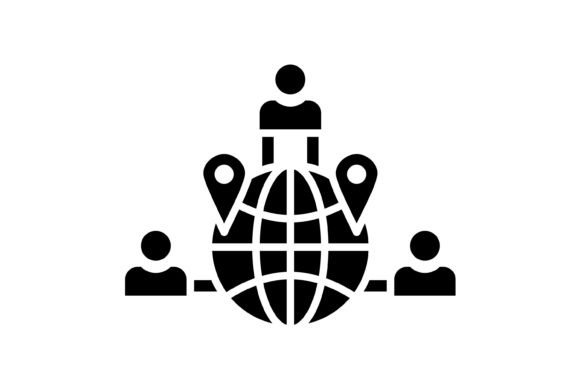
At its core, the Global Network Glyph Icon presents a stylized representation of our interconnected world. You'll typically see a clean, geometric globe form, often intersected by lines suggesting networks, data flow, or orbital paths. The style leans towards a modern, minimalist aesthetic, favoring clarity over intricate detail. This isn't a noisy, overly detailed illustration; it's a distilled symbol designed for instant recognition. The personality is professional, tech-savvy, and trustworthy. It avoids trendy quirks in favor of timeless geometric simplicity, ensuring it won't feel dated in a year. This makes it an excellent fit for brands that want to project stability and innovation simultaneously.
The real value lies in its format flexibility. Having this icon in AI, EPS, JPG, PNG, and SVG means you're covered for virtually any project. The vector formats (AI, EPS, SVG) are your best friends for projects where you need to change colors, resize to a billboard or a favicon without losing quality, or integrate the icon into a larger custom illustration. The PNG with a transparent background is perfect for quick use in presentations, social media graphics, or website mockups where you need to drop it onto a colored background. The JPG is there for when you need a simple, flattened image for documents or quick drafts.
Where This Icon Truly Shines: From Apps to Annual Reports
Let's talk about real-world application. For mobile app developers and UI/UX designers, this icon is a workhorse. Use it as the app icon for a networking tool, a global logistics tracker, or a collaboration platform. Its clarity at small sizes ensures it remains legible on a crowded phone screen. For website design, it can anchor a "Services" section, highlight a "Global Operations" page, or serve as a bullet point in a list of features. Its vector nature means it will load crisply on high-resolution displays.
For print and branding projects, think beyond the obvious. A consulting firm could use a subtle, watermark-style version of the icon on letterheads and business cards. A nonprofit focused on international aid could feature it prominently on their annual report cover. Packaging design for tech gadgets or specialty foods marketed internationally could use it to signify global sourcing or connectivity. The key is that it acts as a visual shorthand, instantly communicating a core brand value without needing a paragraph of text.
Marketers and content creators will find it invaluable for social media graphics. Use it in Instagram Stories to promote a webinar about digital marketing trends. Incorporate it into LinkedIn post graphics when discussing global market expansion. It adds a layer of professionalism and relevance that a generic stock photo simply can't match. For presentations and pitch decks, it helps build a narrative around scalability, network effects, or worldwide reach, reinforcing your talking points visually.
Making the Most of Your Design Assets: Practical Guidance
Choosing an icon is one thing; using it effectively is another. First, evaluate the fit. Does the icon's geometric, modern style align with your brand's existing typeface and visual language? If your brand uses a warm, handwritten font and organic shapes, this stark, network-based icon might feel jarring. It pairs best with clean sans-serif fonts (like Helvetica, Futura, or Inter) or even a modern serif font with low contrast, creating a balanced, contemporary look.
Next, consider visual hierarchy and consistency. If you use the Global Network Glyph Icon on your website header, consider using a simplified version or a related glyph from the same style for your favicon. This creates a cohesive brand identity. Don't just use it once and forget; let it become a recognizable element of your visual system.
Readability and context are paramount. An icon is meant to aid understanding, not create confusion. Always pair it with clear, concise text. A globe icon next to the word "Services" is clear. The same icon next to the word "Potatoes" is confusing. Ensure there is enough visual space around the icon so it doesn't crowd other elements. Test it in both light and dark mode scenarios for digital projects, and check its contrast against different colored backgrounds for print.
Finally, think about font pairing and design assets as part of a larger ecosystem. This icon is a premium design asset. Treat it with the same care you would a premium font or a custom color palette. Its strength is its utility and consistency. By integrating the Global Network Glyph Icon thoughtfully across your logo design elements, editorial design layouts, and digital platforms, you reinforce a message of connectivity and professionalism. It’s a small element that, when used consistently, contributes significantly to how your audience perceives and engages with your brand.