Securing Your Digital Narrative with the Web Security Glyph Icon
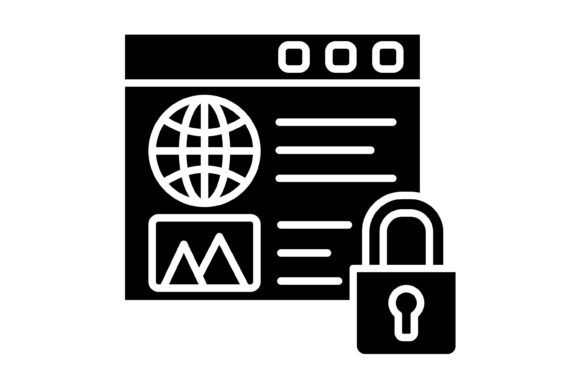
In the landscape of modern design, where trust is the currency of every click, visual communication has to do more than just look good—it has to work hard. We spend hours selecting the perfect premium font or refining a color palette, but often, the functional icons that guide our users get treated as an afterthought. If you are building a digital product, managing a brand, or crafting a presentation, the assets you choose tell your audience exactly how seriously you take their safety. This is where the Web Security Glyph Icon steps in. It isn't just a collection of lock symbols and shields; it is a carefully engineered design asset intended to bridge the gap between aesthetic beauty and functional security.
The Anatomy of a Security Icon: More Than Just a Lock
When we talk about a "glyph," we are referring to the specific shape of a character or symbol. Unlike a standard photograph, a glyph is designed with vector precision. The Web Security Glyph Icon is built on a 100% vector foundation, which means every curve, line, and angle is mathematically defined. Visually, this creates a crispness that raster images simply cannot replicate. Whether you are viewing it on a 4K monitor or a mobile screen, the edges remain sharp, embodying a style that is clean, contemporary, and authoritative.
The personality of this icon set leans heavily into modern typography trends. It avoids the overly playful or cartoonish styles that might undermine a user's trust in a banking app or an e-commerce checkout page. Instead, it offers a balanced visual weight. It has the solidity of a sans serif font—clean, geometric, and devoid of unnecessary ornamentation. This minimalism is its strength. By stripping away the clutter, the icon communicates safety and efficiency instantly. It feels professional, serious, and reliable—three qualities essential for any brand identity dealing with user data or secure transactions.
Practical Versatility: From Mobile Apps to Print
One of the most significant hurdles designers face is asset fragmentation. You might find a great icon for your website, but it falls apart when you try to use it in a print brochure or a high-resolution presentation. The Web Security Glyph Icon solves this headache through its file format inclusivity. Delivered in a comprehensive zip file containing AI, EPS, JPG, PNG (with transparent background), and SVG formats, this set is designed for true cross-platform agility.
Consider the workflow of a small business owner launching a new service. You might need to update your mobile app interface on Monday, print flyers for a local trade show on Wednesday, and create a pitch deck for investors on Friday. With this icon set, you don't need to hunt for new assets each time.
- Mobile Apps & Web Design: The SVG format is the hero here. It scales perfectly to any resolution, loads quickly, and can be manipulated via CSS if you need to change colors based on user interaction (like a "locked" vs. "unlocked" state).
- Editorial Design & Packaging: The vector AI and EPS files allow you to scale the icon to the size of a billboard or the back of a business card without losing quality. This is crucial for maintaining brand consistency across all touchpoints.
- Social Media & Marketing: The PNG files with transparent backgrounds are ready to drop onto Instagram stories, Facebook covers, or email headers. They integrate seamlessly with your background colors and imagery, acting as a visual seal of approval for your content.
This adaptability makes it a vital component of your design assets library. It functions less like a one-off image and more like a utility typeface—ready to be deployed wherever security needs to be communicated.
Visual Hierarchy and Brand Perception
In design, visual hierarchy dictates what the user sees first, second, and third. While a bold display font might catch the eye, functional icons guide the user's hand. The Web Security Glyph Icon plays a critical role in this hierarchy. When placed correctly, it anchors the user's confidence. It acts as a silent promise that the platform they are interacting with is safe.
Think about how this influences brand perception. A sloppy, pixelated icon can make a website look amateurish, regardless of how good the copywriting is. Conversely, a crisp, well-designed glyph signals professionalism. It suggests that the business cares about the details. For designers and entrepreneurs, using a high-quality security icon is a subtle but powerful way to elevate a logo design or a landing page. It tells the user, "We have invested in your safety."
Integrating the Glyph: A Guide for Creatives
So, how do you actually implement the Web Security Glyph Icon effectively? It requires a bit more thought than just dragging and dropping. Here is some practical guidance on evaluating fit and ensuring maximum usability.
Evaluating Project Fit and Font Pairings
Because this icon set has a geometric and neutral personality, it pairs exceptionally well with a wide range of typefaces. However, the most successful pairings usually involve contrast and harmony.
If you are working on a corporate identity or a fintech app, try pairing the icon with a sturdy serif font. The traditional weight of the serif letters conveys heritage and trust, while the clean lines of the security glyph add a modern, technical edge. Conversely, if your brand identity is more tech-forward and sleek, pair the icons with a clean sans serif font. This creates a cohesive, monochromatic look that feels fast and efficient.
Avoid pairing these icons with overly decorative script fonts or chaotic handwritten fonts in the immediate vicinity of security features like login forms or payment gateways. The visual dissonance between a "fun" font and a "serious" security icon can confuse the user and dilute the message of safety.
Readability and Sizing Considerations
Even though the Web Security Glyph Icon is vector-based, size matters. In web design, an icon that is too small becomes invisible; one that is too large feels clunky. Test the icon at the specific size it will appear in your UI. Does the symbol remain recognizable when it is 16x16 pixels? If you are using a complex shield design, it might lose definition at very small sizes. In that case, you might need to switch to a simpler lock glyph included in the set.
Color contrast is another vital factor. Ensure the icon stands out against its background. If you are using the transparent PNG version, check that the icon color you choose meets WCAG accessibility standards. A light grey security icon on a white background might look elegant, but it fails functionally if users can't see it.
The "Ready to Use" Advantage
The feature set of this collection emphasizes that it is "ready to use for all devices and platforms." This is a massive time-saver for content creators and marketers. You don't need to be an expert in Adobe Illustrator to make these work. The JPGs are ready for quick blog posts, and the PNGs are ready for drag-and-drop design tools like Canva or Figma. However, because they are 100% vector, you have the freedom to edit and scale them if you have the software skills. This dual nature—accessible to hobbyists but powerful enough for professionals—makes it a standout creative font asset.
Final Thoughts on a Functional Asset
Ultimately, design is about solving problems. The problem of user trust in a digital environment is complex, but the visual solution can be simple. By incorporating the Web Security Glyph Icon into your toolkit, you are equipping yourself with a versatile, professional, and highly functional asset. Whether you are a blogger securing a newsletter sign-up, an entrepreneur building an app, or a designer refining a client's brand identity, this icon set provides the visual language of safety. It is a small detail that makes a massive difference in how your audience perceives and interacts with your work.