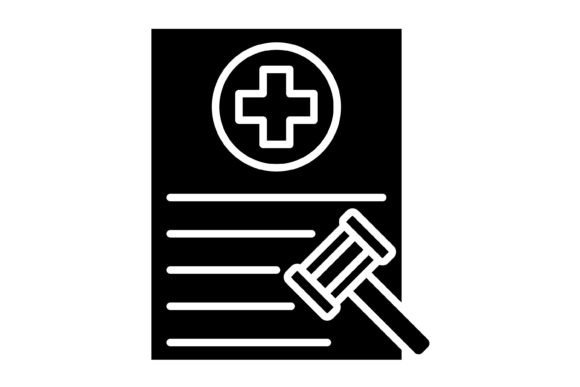
Health Law Glyph Icon: Practical Design for Modern Professionals
Finding the right visual asset for a project can be a challenge, especially when it needs to communicate specific concepts like health and law with clarity and professionalism. The Health Law Glyph Icon is a design asset built for that exact purpose. It’s not a typeface in the traditional sense of a full alphabet, but rather a carefully crafted symbol or set of symbols intended to convey authority, care, and precision. Its visual character is clean, structured, and immediately recognizable, making it a versatile tool for a range of applications where these themes are paramount.
Understanding the Visual Language of the Glyph
At its core, the Health Law Glyph Icon is a piece of modern typography in icon form. You’ll notice its design likely balances the clinical precision associated with healthcare with the structured authority of legal frameworks. This isn't a whimsical script font or a casual handwritten font; its strength lies in its clarity and neutrality. The lines are deliberate, the forms are geometric, and the overall feel is one of trustworthy professionalism. This makes it a powerful component for logo design where a company needs to project reliability, or for brand identity systems that serve the medical, insurance, or corporate compliance sectors.
The real-world value of such an asset is its immediate communicative power. A well-designed glyph can do the work of paragraphs of text, instantly signaling a topic’s domain. For a small business owner or a marketer creating social media graphics, using this icon can establish context before a single word is read. For a designer working on packaging design for a pharmaceutical product, it can add a layer of professional assurance. It’s a visual shorthand that, when used correctly, enhances understanding and brand perception.
Strategic Applications Across Your Projects
The versatility of the Health Law Glyph Icon is one of its most practical strengths. Because it is delivered as a set of design assets in multiple formats—AI, EPS, JPG, PNG, and SVG—it’s ready for almost any environment you can imagine.
- Digital & Web Design: The SVG and PNG (with transparent background) formats are perfect for web design. Use them as favicons, within website headers to indicate specific service areas, as icons on pricing tables for legal or medical plans, or as part of a navigation menu. Their vector nature means they scale perfectly on any screen, from mobile phones to large monitors, ensuring readability and crispness.
- Mobile & Application Design: For developers and designers creating mobile apps, particularly in the health-tech or legal-tech space, this icon is invaluable. It can serve as a section header, a feature indicator, or part of a user interface toolkit. Its clean style ensures it integrates seamlessly with various UI/UX designs without causing visual clutter.
- Print & Editorial Projects: In editorial design, such as a report, whitepaper, or magazine article on healthcare policy, the glyph can be used as a pull-quote marker, a chapter divider, or an infographic element. The high-resolution JPG and scalable vector files guarantee it will print with sharp detail on any material, from business cards to brochures.
- Presentations & Templates: Building a professional presentation for a law firm or a medical conference? Integrating this icon into slide masters or template elements can create a cohesive and polished look. It helps in building visual hierarchy, guiding the audience’s attention to key points about compliance, patient rights, or corporate governance.
Making It Work: Practical Guidance for Designers and Creators
Simply having a premium font or icon asset is only the first step. Using it effectively requires a bit of strategy. Here’s how to approach the Health Law Glyph Icon to maximize its impact.
Evaluate the Fit: Before you start, consider your project’s personality. Is your brand voice authoritative and traditional, or is it modern and approachable? This glyph leans towards the modern and authoritative. It would pair well with clean sans serif fonts for a contemporary feel, or with a sturdy serif font for a more established, traditional look. Avoid pairing it with overly decorative typefaces, as this can create visual dissonance and undermine the professional tone.
Test for Readability and Scale: One of the key features of this asset is that it is 100% vector. This means you can scale it to a billboard or shrink it to a favicon without losing quality. However, always test its legibility at the intended size. A complex glyph might lose detail when very small. Use the PNG version for quick digital mockups and the SVG or AI files for final production, especially in print, to ensure maximum flexibility.
Consider the Context and Pairings: Think about what the icon will sit next to. If you’re using it in a font pairing scenario, does it complement the headline and body copy? It should act as an accent, not a competitor. In a logo, it might work as a standalone mark or alongside a carefully chosen wordmark. For templates—whether for social media posts, invoices, or letterheads—use the icon consistently in the same position (like a header corner or footer) to build recognition and consistency across all your materials.
Ultimately, the Health Law Glyph Icon is more than just a pretty symbol; it’s a functional component of effective visual communication. By understanding its strengths and applying it thoughtfully, you can enhance the professionalism of your work, clarify your message, and build a stronger connection with an audience that values clarity and trust. Whether you’re a designer crafting a brand identity, an entrepreneur building a website, or a publisher laying out a report, this asset provides a reliable tool to visually anchor projects in the vital spheres of health and law.